98% of managers think they're ready. The study published this week says otherwise.
By Ricardo Fernandes ·
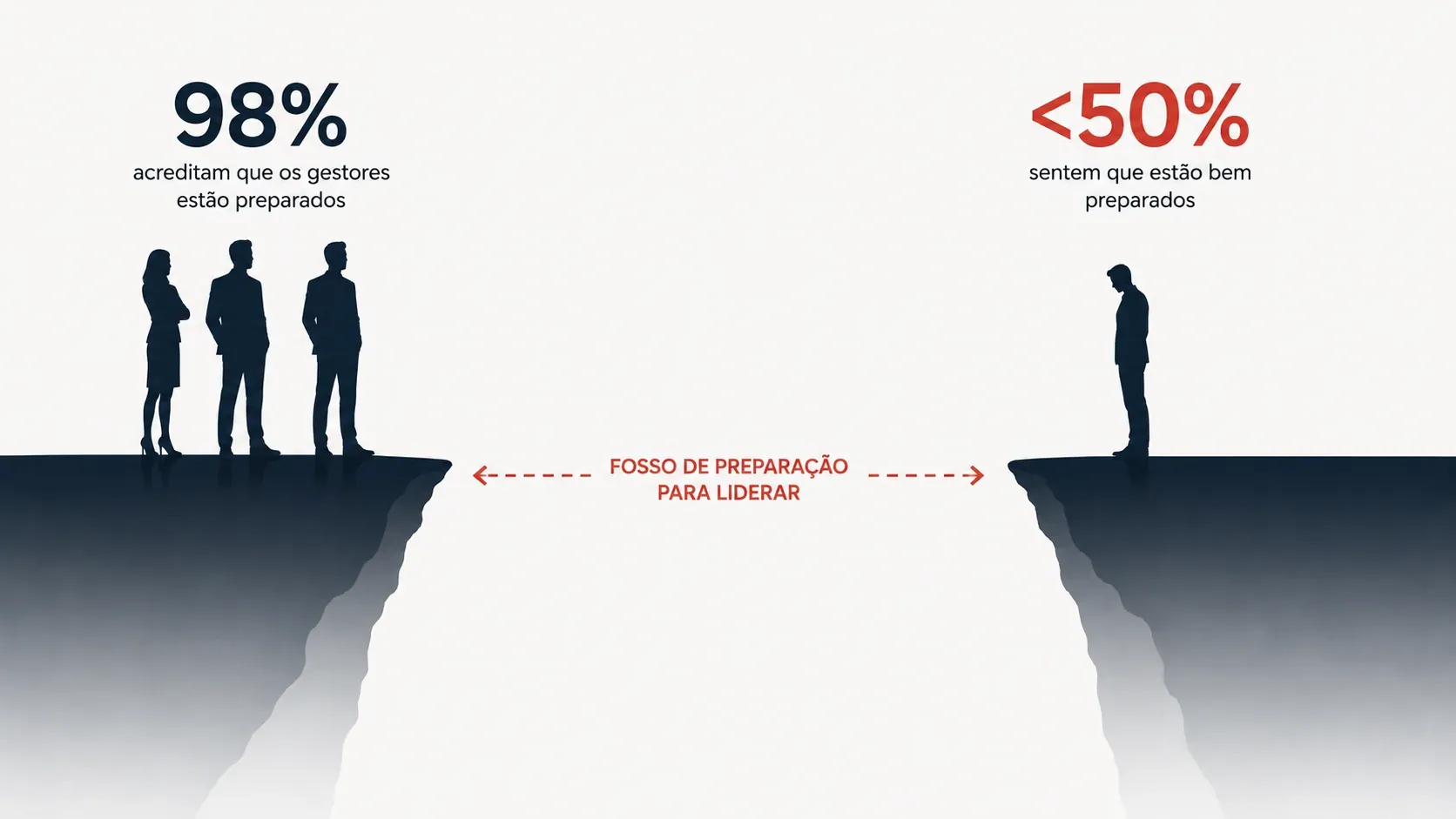
Nearly all people managers (98%) and HR professionals (97%) believe managers are prepared to lead through the challenges ahead. That’s almost total confidence. And that’s exactly where the problem lies.
A study published by Careerminds on September 4, 2026, “The Leadership Readiness Gap”, set that confidence against actual preparedness, and the result is a gap that leaves little room for doubt.
Confidence is not the same as capability
Even though almost everyone agrees managers are ready, fewer than half feel they are well prepared for today’s main leadership challenges. The confidence is there. The specific capability, not so much.
This should sound familiar to anyone who has worked with leadership teams. It’s easy to confuse “I feel capable” with “I have the concrete skills for this specific situation.” They’re different things, and the difference only shows up when the hard situation arrives.
Where the gap is most visible
AI is the clearest example. Only 35% of managers say AI has made their job significantly easier. Most report more anxiety in their teams, constantly shifting workflows, new skills required, and more pressure to deliver results with fewer resources.
Difficult conversations are another blind spot. 97% of HR professionals believe the organisation provides adequate training for handling layoffs, AI-related anxiety, and workplace conflict. Only 41% of managers themselves agree they received that preparation. It’s a gap in perception between those who design the training and those who have to apply it in practice, live, with a person sitting in front of them.
The view changes depending on where you sit in the hierarchy
66% of top executives say they feel very prepared to lead future challenges. Among middle and senior managers, that figure drops to 42%. The same pattern repeats for difficult conversations: 61% of executives feel the training is very adequate, compared with 38% of middle managers.
This suggests something uncomfortable: the people who design leadership development policies are, on average, more comfortable than those closest to the ground, dealing every day with the real discomfort of the role.
The weight of being in the middle
Nearly nine in ten HR professionals (88%) and 72% of managers acknowledge that managers are regularly caught between executives’ expectations and their teams’ needs. Fewer than half feel they have strong organisational support to manage that tension.
It’s the most draining position in the hierarchy, and also the least equipped.
What this costs organisations
Respondents link these leadership gaps directly to higher risk of talent loss, shortages of critical skills, lower engagement, slower decisions, and reduced productivity. This isn’t an abstract training problem. It’s a problem with a direct impact on the business.
The question that remains
If you ask your middle managers whether they feel ready for the next two years, the answer will probably be yes. The more useful question is a different one: ready for what, exactly, and with what concrete support behind that confidence?