AI doesn't fail because of the technology. It fails because of the manager.
By Ricardo Fernandes ·
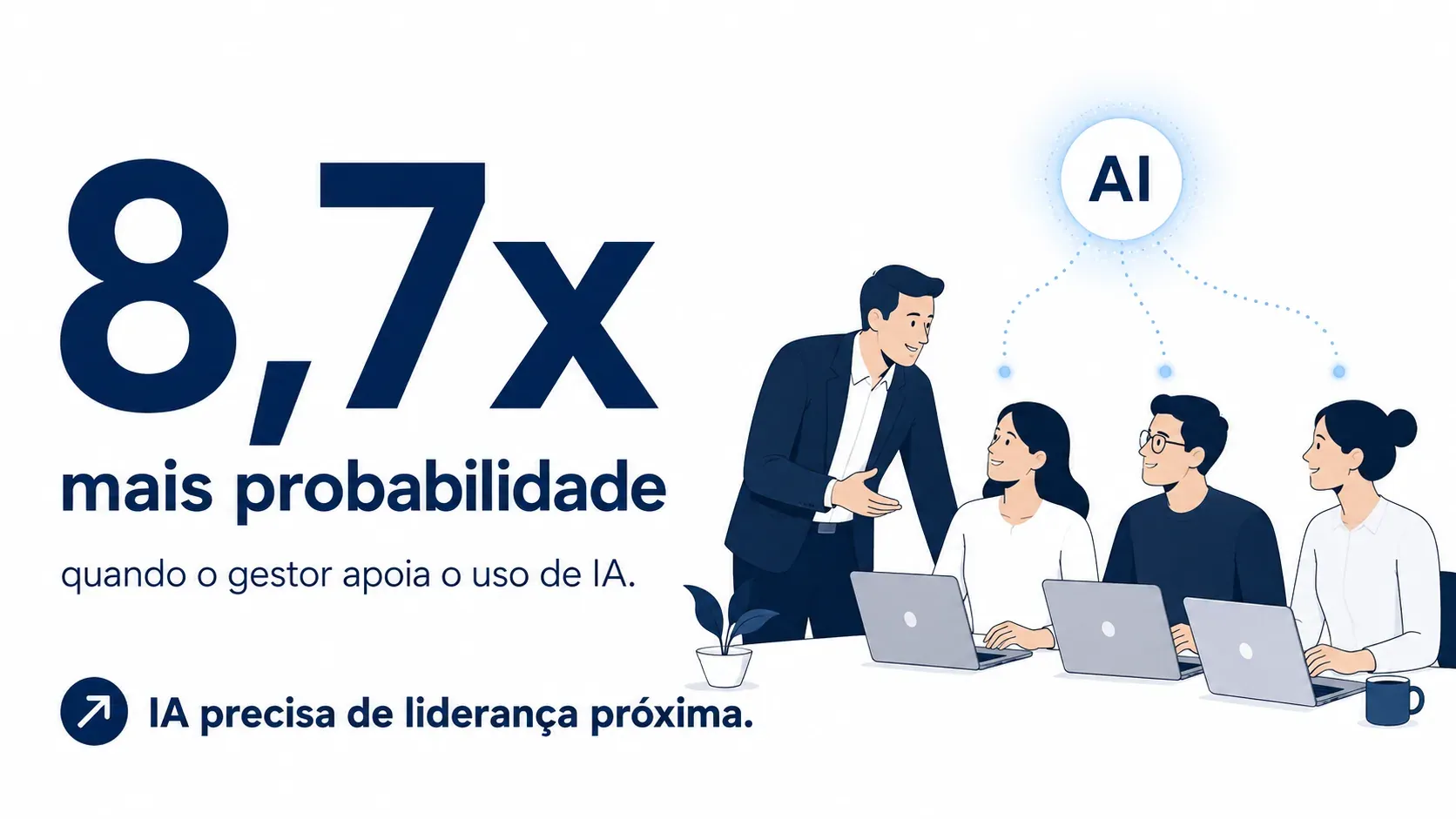
Employees whose manager actively supports AI use in the team are 8.7 times more likely to say the technology has transformed how they work. Without that support, the tool gets installed, but sits idle.
This figure, from Gallup’s State of the Global Workplace 2026 report, should change the conversation most companies are having about AI.
The starting mistake
Most AI investments in organisations follow the same logic: buy the right tool, provide technical training, wait for adoption. When adoption doesn’t happen, the usual response is more technical training, or switching tools.
Gallup’s data shows this reasoning ignores the variable that weighs the most. It isn’t the quality of the tool. It’s whether the direct manager believes in it, uses it, and makes room for the team to experiment without fear of getting it wrong.
What “supporting” means in practice
It isn’t sending an email saying AI is available. It’s the manager asking in a team meeting what’s working and what isn’t. It’s tolerating the first odd results, the beginner mistakes, without turning them into a reason for distrust. It’s showing, through their own work, that they’re learning too.
A manager who treats AI as just another tool to manage from a distance, without getting involved, communicates that clearly to the team, even without saying a word. And the team responds accordingly.
Why this keeps surprising people
It keeps surprising people because the dominant narrative about AI in companies is technical: models, integrations, tool comparisons. But real adoption of any change in the way people work has always depended on the same factor, long before AI existed. It depends on whoever is closest to the team, every day, validating or holding back what’s new.
AI has only made this pattern more visible, and more expensive when ignored.
What this asks of organisations
If the goal is for AI to generate real impact, the right investment isn’t only in licenses and technical training. It’s in preparing middle managers to lead that change up close, with room for doubt and mistakes. Without that, the tool stays installed on the team’s computers and forgotten in the daily work routine.
The question that remains
If your company invested in AI this year, do your middle managers know they’re part of that equation, or do they think it’s only the business of whoever handled the tool purchase?