Reverse mentoring: when the leader learns from the people they lead
By Ricardo Fernandes ·
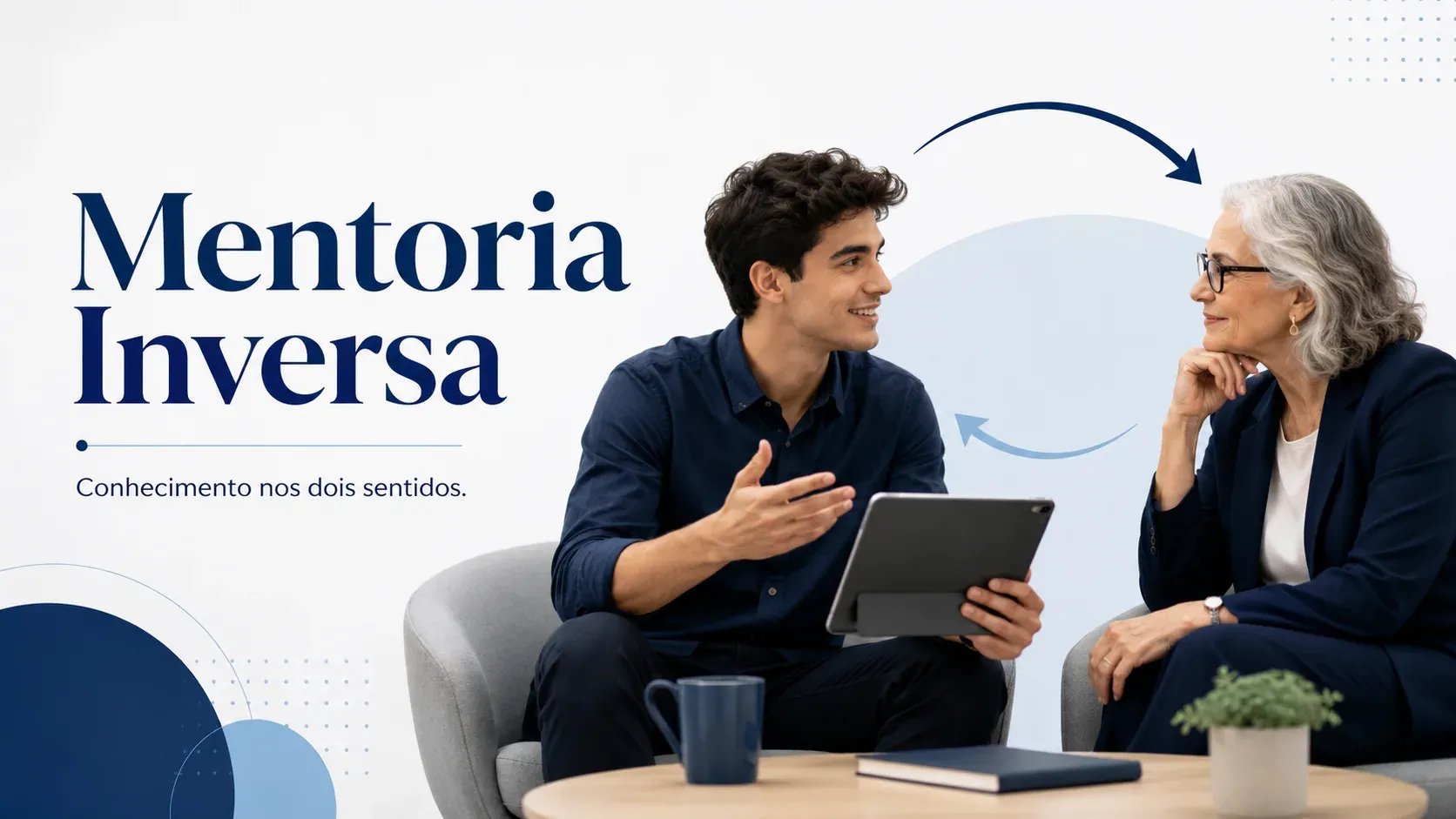
Some large companies run “Reverse Mentoring” programs to exchange knowledge across different generations and hierarchical levels. Younger talent teaches digital skills to senior professionals. The traditional hierarchy of knowledge is turned upside down, and nobody loses status because of it.
This model has been gaining ground in conversations about organisational development, and not by chance.
The idea behind it
For decades, mentoring meant only one thing: someone more experienced passing knowledge on to someone more junior. It made sense in a world where accumulated experience was almost always synonymous with competitive advantage.
The problem is that this model assumes the most valuable knowledge always flows from the top down. In areas like technology, digital tools and, more recently, AI, that assumption is no longer true. Often it’s the younger employee, closer to the new tools, who has the most up-to-date knowledge, and the senior leader who needs to acquire it.
Reverse mentoring is born precisely from that recognition.
What changes in practice
It isn’t just a question of who teaches what. It’s a shift in the power dynamic implicit in the conversation. When a senior executive sits down with someone twenty years younger to learn, they are publicly admitting a gap. That requires a kind of humility that the traditional hierarchical structure rarely encourages.
For those who lead, this exposure is uncomfortable at first. And it’s precisely that discomfort that creates the value. A leader who accepts not knowing, in front of someone lower in the hierarchy, communicates something powerful to the rest of the organisation: that continuous learning is normal, even at the top.
The benefit runs both ways
The more junior employee gains direct visibility with leadership, a rare space to be heard without the usual filters of the chain of command. This has a real impact on retention and on a sense of belonging, especially among younger talent who value closeness and having a voice more than previous generations did.
The senior leader gains something equally valuable: a direct view of how the business is experienced by those closest to the day-to-day work, without the filter of reports and polished presentations. It’s information that would hardly arrive any other way.
Where this meets the deeper leadership problem
Reverse mentoring doesn’t, on its own, solve the structural problems of leadership preparation we’ve already talked about, the confidence that outstrips capability, the gap between perception and real impact. But it tackles a symptom common to all of them: the isolation at the top of the hierarchy, which filters information and feedback before it reaches the people who make decisions.
By creating a direct channel, without intermediaries, between those who lead and those furthest away in the structure, reverse mentoring brings back some of that lost information.
The risk of treating it as a symbolic gesture
Like any trendy initiative, there’s a risk it turns into corporate theater: a one-off meeting, photographed for LinkedIn, with no real follow-through. To work, reverse mentoring needs the same structure as any serious mentoring relationship, regularity, clear goals, and above all, a genuine willingness on the senior side to listen without getting defensive.