The biggest blind spot in LEADERSHIP
By Ricardo Fernandes ·
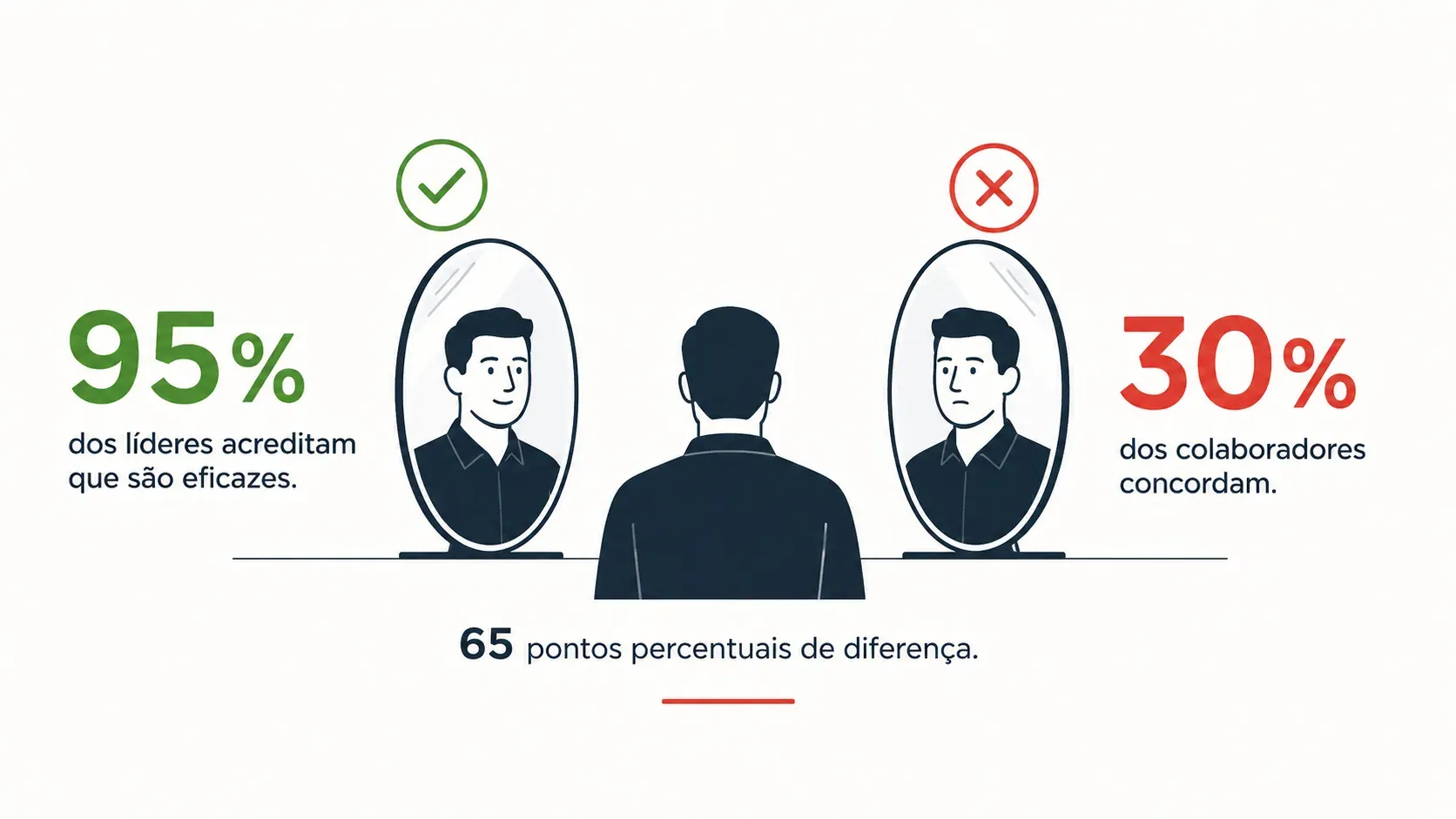
Almost every leader believes they are effective. Far fewer employees agree.
A gap like this is not a measurement error. It is a symptom.
Two snapshots of the same leader
Ask a leader to assess themselves and, in the overwhelming majority of cases, the answer is positive. Ask the team that reports to that leader to make the same assessment and the picture changes completely. It’s not that one of them is lying. It’s that they are answering different questions, even if the written question is the same.
The leader answers based on intention: I wanted to help, I tried to listen, I made an effort to be fair. The team answers based on impact: did we feel heard, were we treated fairly, did we leave meetings clearer or more confused. Intention and impact can point in completely opposite directions, and that is exactly where this 65-percentage-point gap lives.
Why nobody warns you
The higher people climb in the hierarchy, the less direct and honest feedback they receive. People hesitate to correct someone who has power over their careers. Team meetings become a stage instead of a space for real exchange. And, with no contradicting signals, the positive self-assessment goes unchallenged, with no mechanism to test it against reality.
The result is a leader genuinely convinced of their own effectiveness, surrounded by people who have already given up trying to tell them otherwise.
What you don’t know you don’t know
This phrase sounds like a play on words, but it describes the problem precisely. This isn’t about leaders with bad intentions, or even incompetent leaders. It’s about a structural blind spot: what a person cannot see about their own impact, precisely because the position they hold filters out the information that would correct that view.
No technical training solves this on its own. It is solved with deliberate mechanisms that confront perception with reality: well-run 360º feedback, safe spaces where the team can speak at no cost, and above all, leaders who actively ask for the information they least like to hear.
The question that remains
If almost every leader believes they are effective, the question that matters is not “are you a good leader?” It is: when was the last time someone told you, unfiltered, what they really think of your impact? And what did you do with that information after you heard it?