AI already knows who your mentor should be. The question is whether you trust it.
By Ricardo Fernandes ·
Platforms that use AI to match mentors and mentees more precisely, analyse progress data, and personalise support: this is one of the most repeated topics in HR trend reports for 2025 and 2026. And, unlike many corporate fads, this one seems to have a reason to exist.
The problem AI came to solve
For years, matching in mentoring programs relied on superficial criteria: same area, calendar availability, sometimes little more than that. The result was relationships that never got to generate real value, because mentor and mentee didn’t have enough affinity for the conversation to go beyond the surface.
AI comes in exactly at that point. By cross-referencing data on skills, career goals, communication style, and even personality patterns, it can propose pairs far more likely to build a productive relationship than the manual process, done in a hurry by someone in HR with an Excel spreadsheet.
Where the value is most visible
Beyond the initial match, AI is being used to track the progress of the relationship over time. That means spotting signs that the mentoring is losing traction, suggesting relevant conversation topics based on where the mentee is in their career, and giving HR teams visibility into which relationships are actually working, instead of relying on reports filled in out of obligation, weeks after anyone stopped caring.
This solves an old problem with mentoring programs: the lack of data on what actually happens in the conversations, and the difficulty of proving impact when the time comes to justify the investment.
The risk nobody should ignore
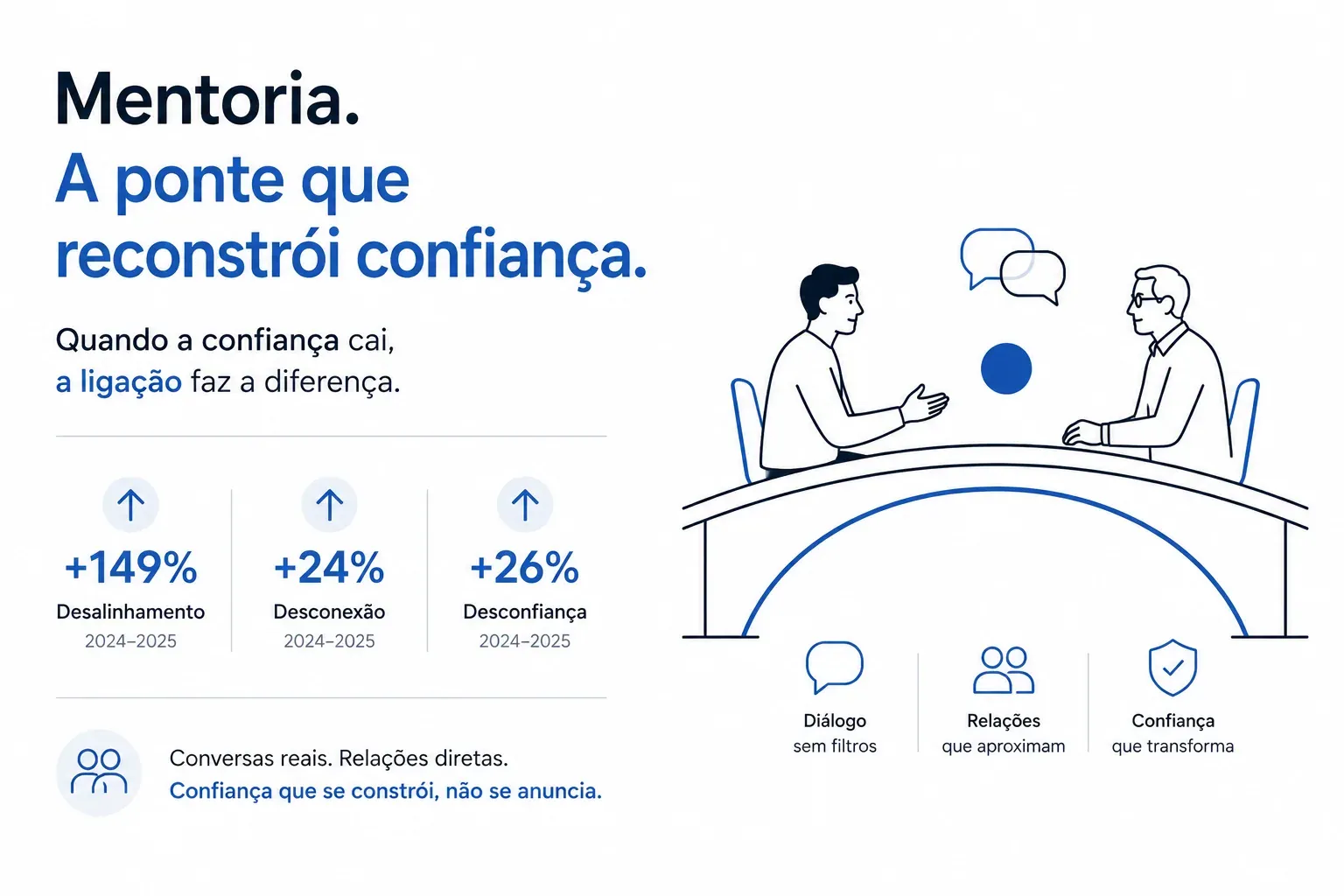
There’s an obvious temptation to treat this as yet another case of full automation. It isn’t, and it shouldn’t be. Mentoring works because it’s a human relationship, with all the discomfort, hesitation, and trust that implies. AI can improve matching and track signs of progress, but the conversation itself, the moment when someone admits a doubt or a fear in front of their mentor, remains irreplaceable.
The real risk isn’t AI replacing mentoring. It’s organisations confusing a good matching algorithm with a successful mentoring program, and no longer investing in what really matters: protected time, mentor training, and a culture that values these conversations.
A deeper question, rarely discussed
There’s also a question most trend reports avoid: what data is the platform using to decide who matches with whom? If the algorithm learns from historical patterns of success, and those patterns reflect old biases, about who “looks like” they have leadership potential, for example, AI may end up replicating exactly the biases mentoring was supposed to help correct.
This isn’t a reason to avoid the technology. It’s a reason to ask, before adopting any platform, what data the system was trained on, and what guarantees exist that it isn’t simply automating old prejudices with a layer of technical sophistication on top.