Your manager decides whether you stay or go. More than salary, more than almost anything.
By Ricardo Fernandes ·
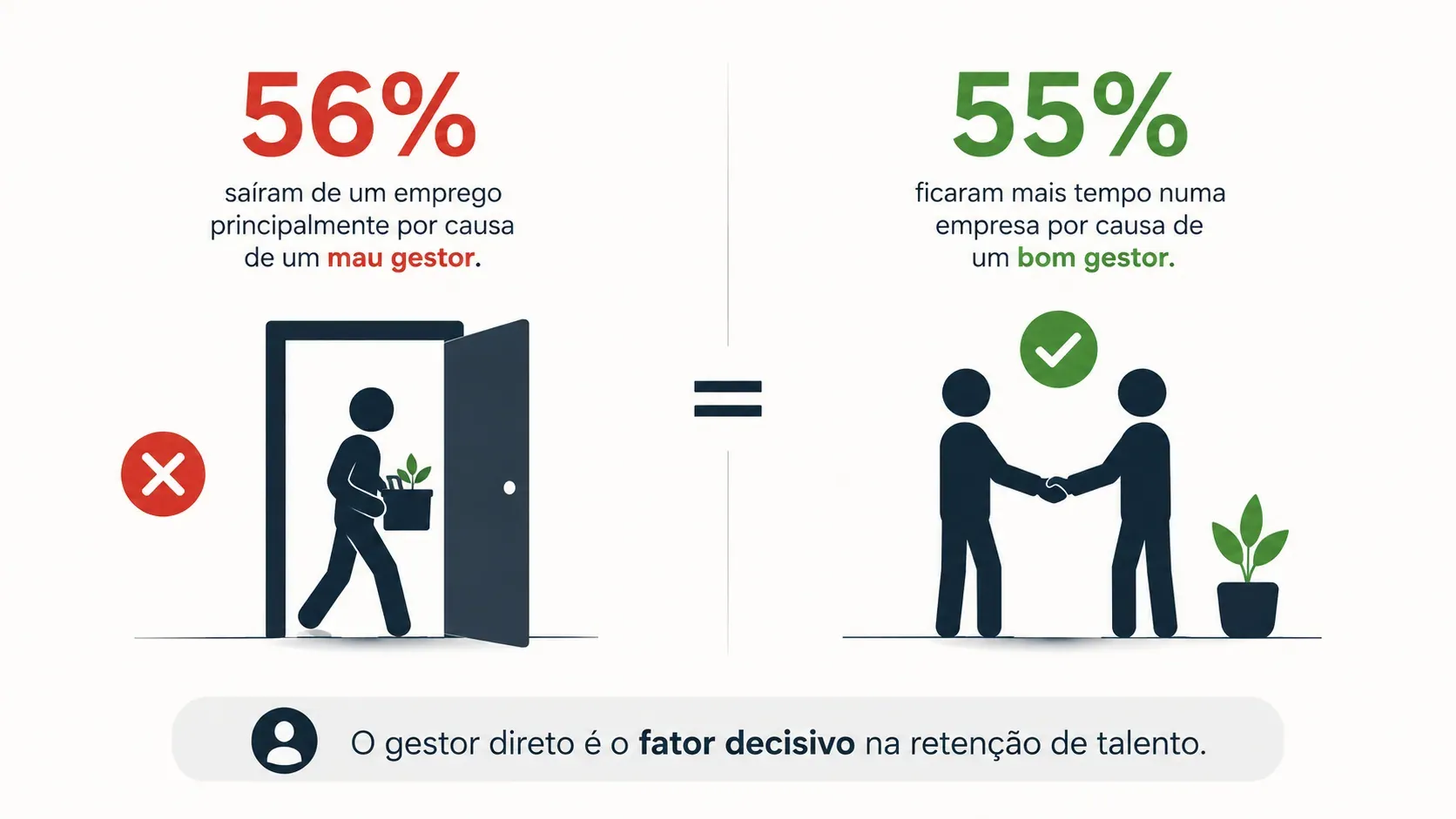
56% of workers have left a job mainly because of a bad manager. 55% stayed longer at a company because of a good one. That’s practically the same weight, in opposite directions.
These numbers, from Monster’s 2026 Workplace Relationships Report, confirm something most people working in HR or leadership already knew by instinct. Only now it’s written down in numbers, and that’s hard to argue with.
The most underestimated variable in retention
When a company loses talent, the most common explanation points to salary, benefits, or a lack of growth opportunities. They all matter, but the Monster data suggests there’s one variable that remains undervalued in retention conversations: the direct quality of the relationship with the manager.
This isn’t surprising from a human point of view. People don’t work for an abstract company. They work every day with a specific person who approves their requests, gives feedback, recognises or ignores their effort, protects or exposes the team. That relationship, more than any HR policy written in a handbook, defines the real experience of working there.
What separates the two groups
What’s interesting about these two numbers isn’t just their size, it’s the symmetry. A bad manager isn’t just neutral, they actively push people toward the exit. A good manager isn’t just pleasant, they become reason enough to stay, even when other conditions might justify leaving.
This means the manager’s impact works both ways, with almost the same weight. It isn’t a minor factor to add to the others. For many people, it is the deciding factor.
Why this keeps being ignored
Many organisations still treat manager training as an extra, something you invest in when there’s budget left over, after the “more urgent” priorities are taken care of. The Monster numbers show that this ranking of priorities is upside down. If half of retention depends directly on the quality of the direct manager, investing in that skill isn’t optional. It’s central.
The problem is that most managers reach the role on technical merit, not through preparation to lead people. They learn by doing, on their own, often too late to keep the team from already starting to walk out the door.
What’s under the organisation’s direct control
Unlike macroeconomic or labour market factors, the quality of the relationship between manager and team is something the organisation can influence directly, through training, close support, and a culture that treats people management as a skill to develop, not as a natural talent you either have or don’t.
The question that remains
If you asked your team today why they stay, or why they would leave, how many answers would point directly to you?